

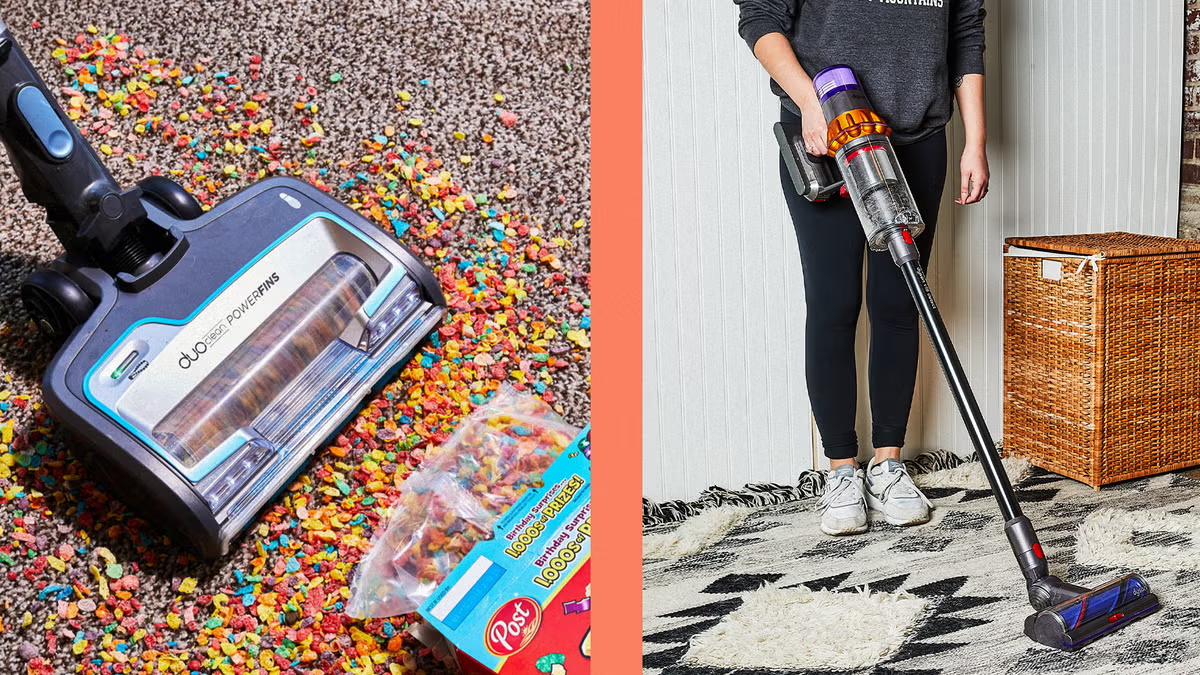
I’ve owned five cordless vacuums over the past eight years. Two were complete garbage that died within months. One worked okay but was so heavy my arm hurt after ten minutes. Another had amazing suction but lasted maybe fifteen minutes before the battery died.
The one I’m using now? Actually works like I hoped they all would. Took way too much money and frustration to figure out which features actually matter versus marketing nonsense that sounds good but doesn’t affect real-world cleaning.
Manufacturers love throwing specs at you – watts, air watts, pascals, cyclonic action, HEPA filtration. Most of it is meaningless without context. What actually matters is whether the vacuum cleans your floors without making you hate your life.
Here’s what I learned matters and what’s just noise.
Battery Life That’s Actually Usable
Every cordless vacuum claims 40-60 minutes of runtime. Then you read the fine print – that’s on the lowest power setting with no attachments. Crank it to max power with the motorized head, and you’re getting 12-15 minutes before it dies.
My first cordless had a 20-minute battery on max power. My house is 1,800 square feet. I’d get through maybe two rooms before it died, then wait three hours for recharging. Completely defeated the purpose of cordless convenience.
Realistic runtime on the power setting you’ll actually use matters way more than theoretical maximums. I need at least 30 minutes on medium-high power to clean my main floor without stopping.
Removable batteries are a game-changer. My current vacuum has two batteries – one charges while I use the other. Infinite runtime as long as I swap them. Costs extra but eliminates the biggest frustration with cordless cleaning.
Charging time matters too. Some vacuums need 4-5 hours to fully charge. Others hit 80% in an hour. When you forgot to charge it and need to vacuum before guests arrive, fast charging saves you.
Battery degradation is real. That 45-minute runtime becomes 30 minutes after a year and 20 minutes after two years. Replaceable batteries let you refresh performance instead of replacing the entire vacuum.
Suction Power You Can Actually Feel
Manufacturers measure suction in air watts or pascals, which mean nothing to normal people. What matters is whether it picks up the mess on your floor.
My second cordless had impressive specs but couldn’t pick up cereal from my kitchen floor. The problem was poor brush head design – suction was strong but the opening didn’t make contact with the floor properly.
Adjustable suction lets you match power to the surface. Max power for ground-in dirt on carpet, lower settings for hardwood or rugs that get sucked up. Fixed-power vacuums either lack strength or waste battery on easy tasks.
Carpet performance differs dramatically from hard floor performance. Some vacuums excel on tile but bog down on medium-pile carpet. Others do great on carpet but scatter debris on hardwood instead of capturing it.
Test the vacuum on your actual floor types before committing. Store displays help, but nothing replaces running it on your own carpets and hard floors with real dirt.
Weight And Balance
Spec sheets list weight, but they don’t tell you how that weight feels during use. A bottom-heavy vacuum feels lighter than a top-heavy one even at the same weight.
My heaviest vacuum weighed just under 8 pounds. Doesn’t sound like much until you’re holding it extended for twenty minutes cleaning stairs or reaching under furniture. My arm was dead after every cleaning session.
Balance matters enormously. Weight concentrated near your hand feels manageable. Weight in the cleaning head or up top creates leverage that tires your wrist and shoulder fast.
Wand length affects usability for different heights. My wife is 5’3″ and I’m 6’1″. Vacuums designed for average height force one of us into awkward positions. Adjustable wands help but aren’t common enough.
Maneuverability around furniture depends on both weight and articulation. Swivel heads navigate chair legs easily. Fixed heads require lifting and repositioning constantly.
Dust Bin Size And Emptying
Tiny dust bins require constant emptying. My worst vacuum had a bin that filled after one medium room. Cleaning the whole house meant emptying it six times.
Bin size needs to match your space. For my 1,800 square feet, I need at least 0.6 liters to finish without emptying. Smaller apartments can get away with less. Larger homes need more.
The emptying mechanism makes a huge difference. Push-button ejection that actually drops everything cleanly is rare. Most bins require shaking and pulling hair from the opening.
Washable bins and filters save money on replacements but require drying time. I wash mine monthly, which means having the vacuum out of commission for 24 hours while everything dries.
HEPA filtration matters if you have allergies, but it doesn’t make cheap vacuums suddenly good. It’s a nice addition to already-good vacuums, not a substitute for proper engineering.
Attachments You’ll Actually Use
My current vacuum came with eleven attachments. I use three of them – the main floor head, crevice tool, and upholstery brush. The rest sit in a box gathering dust.
The motorized floor head is non-negotiable. Unpowered heads work okay on hard floors but fail completely on carpet. The spinning brush agitates carpet and lifts embedded dirt.
Crevice tools reach tight spaces between appliances and furniture. I use mine constantly for baseboards and couch cushions. Long narrow tools work better than short wide ones.
Upholstery attachments help with furniture and car interiors. The small motorized head on mine picks up dog hair from couch cushions way better than the main floor head.
Wall-mounted charging docks with attachment storage keep everything organized. My previous vacuum had loose attachments that lived in a closet and never got used because I couldn’t find them.
When comparing cordless vacuums, focus on the three attachments you’ll use weekly, not the eight specialty tools you’ll try once.
Noise Level
Nobody mentions noise until you’re running a screaming vacuum at 6:30 AM trying not to wake everyone. Decibel ratings help, but real-world noise quality matters more than raw numbers.
My quietest vacuum measures 72 decibels, which sounds similar to other models. But the tone is lower and less shrill, making it way more tolerable during early morning cleaning.
High-pitched whines penetrate walls and carry through the house. Lower-frequency noise stays more contained to the room you’re cleaning.
Filter Maintenance
Clogged filters kill suction and strain motors. I wash mine every two weeks to maintain performance. Some vacuums have easily accessible filters that rinse clean in seconds. Others require disassembly and frustration.
Replacement filter costs add up over years of ownership. Some brands charge $40-50 for filters that need replacing annually. Others use washable filters that last years.
Wrapping This Up
The best cordless vacuum combines realistic battery life, strong pickup on your specific floors, comfortable weight, and easy maintenance. Everything else is secondary.
Don’t get seduced by fancy attachments or impressive specs. Focus on whether it cleans your actual floors efficiently without making you miserable.
Test before buying if possible. Many retailers accept returns, so try it on your floors with your dirt. Return anything that doesn’t meet expectations.

