

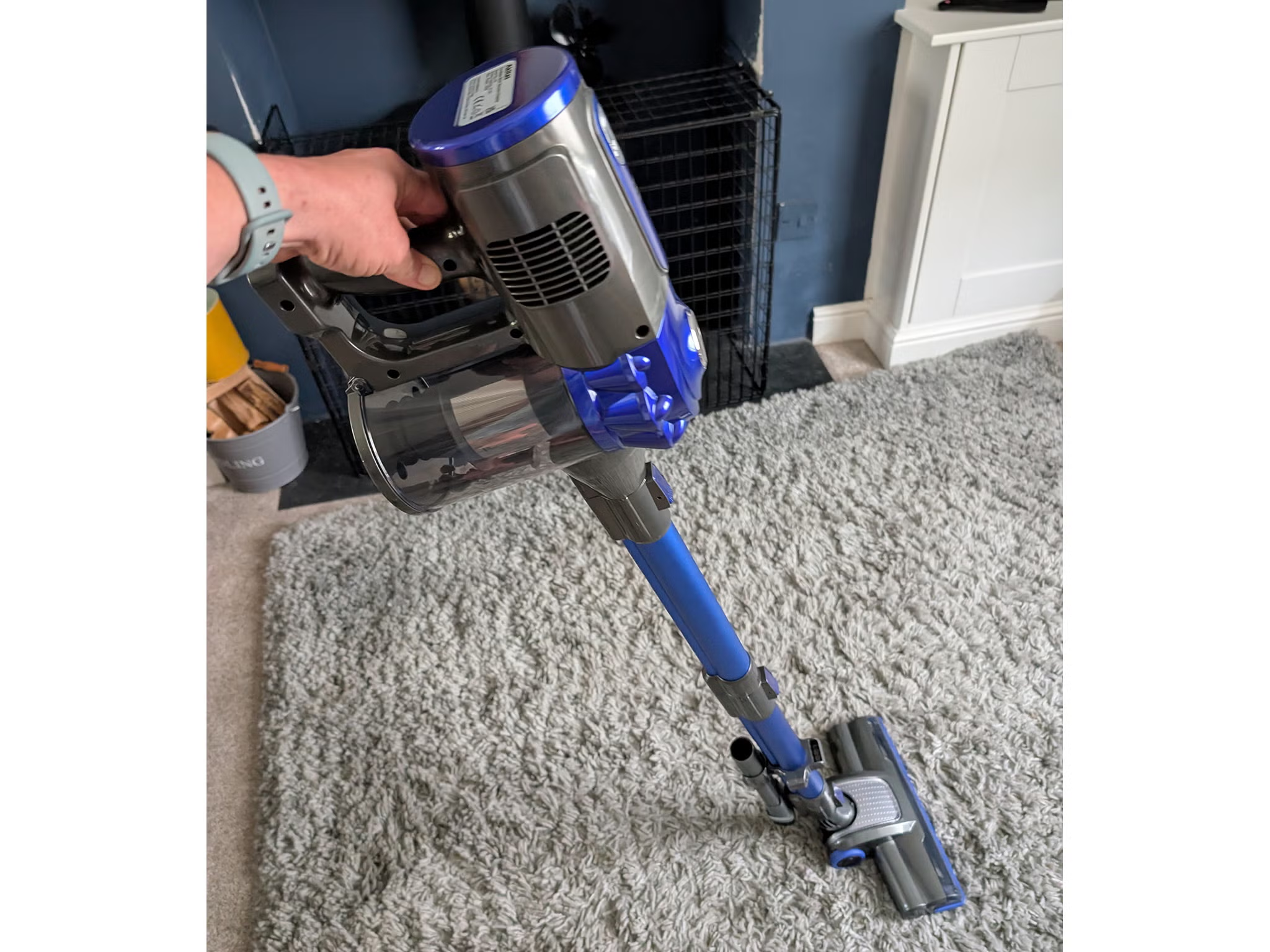
I track weird things. One of them is time spent cleaning – don’t judge me, I’m a data nerd. When we switched to a cordless vacuum, I kept logging cleaning time to see if the convenience claims held up numerically.
Results were dramatic. My average weekly vacuuming time dropped from 52 minutes to 23 minutes. Same house, same dirt levels, same cleanliness standards. The only variable that changed was the vacuum.
How does that work? The vacuum isn’t inherently faster at sucking up dirt. What changed was all the peripheral time wasted with traditional vacuums – setup, cord management, switching outlets, putting away. Death by a thousand small inefficiencies.
Here’s exactly how cordless vacuums cut cleaning time.
Elimination Of Setup And Teardown
Traditional vacuum routine: walk to closet, open door, pull out vacuum, unwrap cord, drag vacuum to starting point. After cleaning: wrap cord, return vacuum to closet, organize attachments. Conservatively, that’s 3-4 minutes per cleaning session.
Cordless routine: grab vacuum from wall dock, start cleaning. When done: return to dock. Total overhead: maybe 5 seconds.
That 3-4 minute difference per session adds up fast. We vacuum daily now – quick 5-minute passes on main living areas. Over a week, the setup/teardown time would’ve added 25-30 minutes that we simply don’t spend anymore.
The psychological barrier matters too. When I know cleaning requires a whole production, I delay it. When the vacuum is immediately ready, I just do it. Reduced friction increases cleaning frequency, which paradoxically reduces total time because messes never accumulate.
No Cord Management Mid-Cleaning
I never realized how much time I spent managing vacuum cords until I stopped needing to. Switch outlets, untangle cords caught on furniture, carry the vacuum to reach the outlet, drag the cord through doorways – constant micro-interruptions.
Our house has outlets positioned poorly for vacuuming. The living room outlet requires routing the cord around a couch and coffee table. Kitchen outlets are blocked by the island. I’d spend more time managing the cord than actually vacuuming.
Cordless eliminates all that. I vacuum in straight logical paths without considering outlet locations or cord length. Kitchen to living room to hallway to bedrooms – continuous flow without stopping.
The time savings is hard to quantify because it’s distributed across hundreds of small moments. But cleaning feels faster and less frustrating, which encourages doing it more often.
Faster Room Transitions
Traditional vacuum room transitions: vacuum to doorway, turn off vacuum, carry it to next room, find outlet, plug in, resume cleaning. Maybe 20-30 seconds per room, times 8-10 rooms equals 3-4 minutes wasted just moving between spaces.
Cordless transitions: walk to next room, keep vacuuming. Zero time lost, zero interruption.
This creates momentum that makes cleaning sessions more efficient overall. I’m in a rhythm, moving continuously through the house rather than starting and stopping repeatedly. Finished cleaning feels like it took less time even when the actual vacuuming duration is similar.
Immediate Response To Messes
The biggest time saver isn’t faster vacuuming – it’s preventing small messes from becoming big problems that require dedicated cleaning time.
Kid spills cereal at breakfast. With a traditional vacuum, I’d sweep it up, but bits would remain in grout lines and under the table edge. Those bits would accumulate with lunch crumbs, dinner spills, and snack debris until the weekly vacuum session.
With cordless: grab it, run it over the mess, done in 60 seconds. The cereal is completely gone instead of partially swept. No accumulation happens because each mess gets fully addressed immediately.
We probably “vacuum” 3-4 times daily now in 1-2 minute bursts. Sounds like more work, but it’s way less total time than letting messes accumulate and dealing with them all at once weekly.
Preventing dirt accumulation also means less intensive cleaning is needed. When you’re only removing today’s dirt rather than a week’s worth of ground-in debris, each cleaning pass is faster and easier.
Versatility Reduces Tool Switching
Traditional cleaning: vacuum floors with upright, get out handheld vacuum for couch, grab duster for shelves, get different attachment for baseboards. Each tool switch costs time finding, setting up, and putting away different devices.
Cordless with attachments: convert to handheld mode, switch attachments, handle multiple surfaces and locations with one tool. All the pieces live together on the charging dock, so transitions take seconds.
I vacuum floors, then pop it to handheld mode and hit the couch cushions, then grab the crevice tool for baseboards – total time including transitions maybe 8 minutes. Doing the same with multiple separate tools would’ve taken 15-20 minutes.
The time savings multiply when you actually use the versatility. Stairs, furniture, car interiors, window sills – all stuff I’d skip with traditional vacuums because switching tools wasn’t worth it. Now I just do it while I’m already cleaning, adding maybe 2-3 minutes but accomplishing way more.
When researching cordless vacuums, pay attention to how easily attachments swap and store. Some models make transitions annoying enough that you won’t bother, losing the time-saving benefit.
Reduced Physical Fatigue
This is indirect time savings. Traditional vacuums tired me out – all that pushing, lifting, cord wrestling. After 45 minutes, I was done and would skip less-important areas to finish faster.
Cordless vacuums are so much lighter and easier to maneuver that fatigue isn’t a factor. I can clean longer if needed without physical strain slowing me down or making me rush through areas.
The lightweight design also means I move faster. I’m not carefully maneuvering a heavy machine – I’m almost jogging through rooms pushing a 6-pound stick. Same coverage in less time with less effort.
Wrapping This Up
Cordless vacuums reduce cleaning time through dozens of small efficiency gains that compound dramatically. Setup elimination, cord management removal, faster transitions, immediate mess response – it all adds up.
My tracked 30-minute weekly reduction might sound too good to be true, but the numbers don’t lie. Same cleanliness standards achieved in significantly less time.
The shift from scheduled deep cleaning to frequent light maintenance also changes the entire dynamic. Five minutes daily feels like less work than 50 minutes weekly, even though the total time is similar.
Time savings alone justified the cost for me. Even if cordless vacuums cost twice what traditional vacuums do, saving 30 minutes weekly equals 26 hours annually. That’s worth paying for.

