

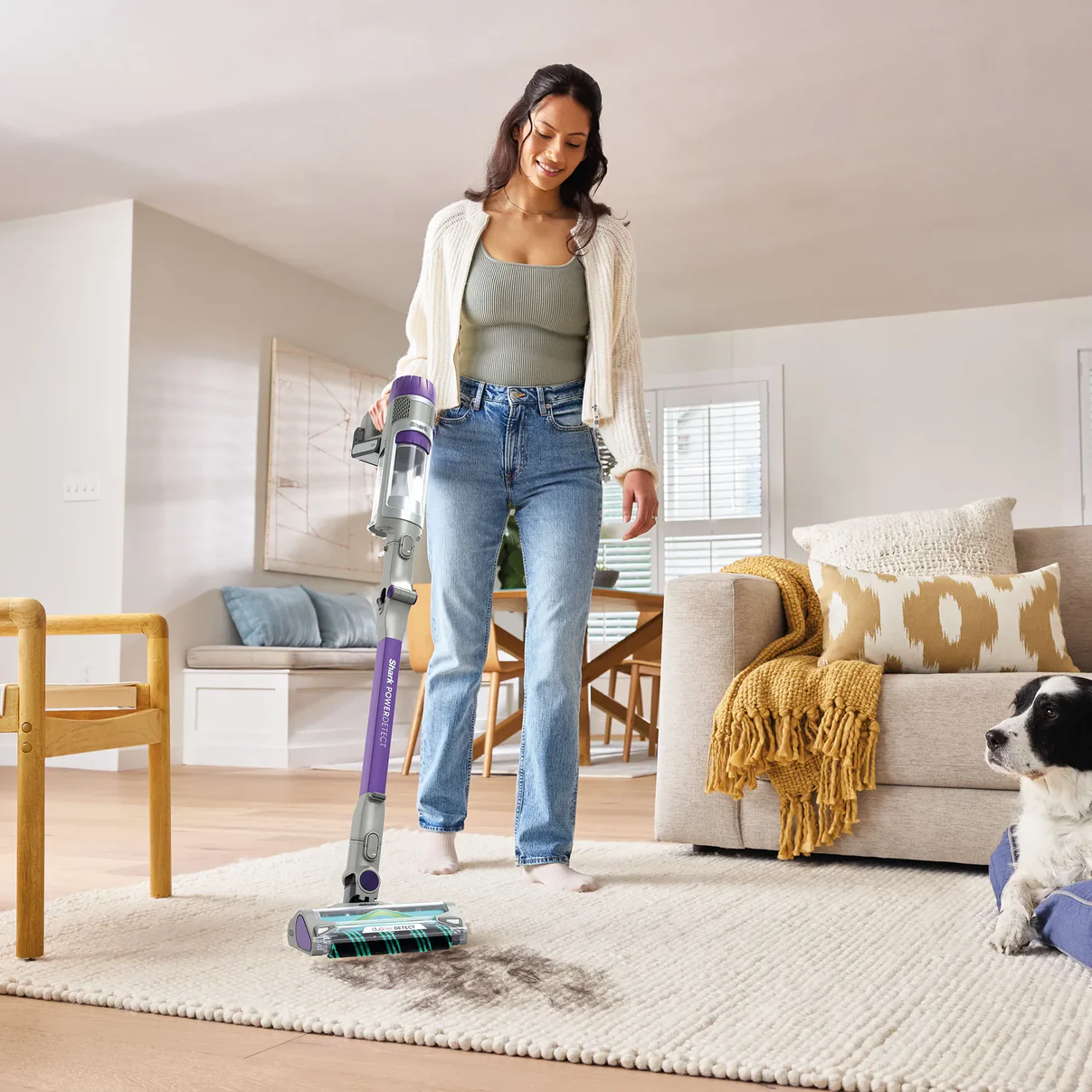
My neighbor swears cordless vacuums are useless on carpet. Says they might work for hard floors but don’t have the power to really clean carpet fibers. He still uses his 15-year-old upright and hauls it around like he’s training for strongman competitions.
I used to think the same thing. Carpet cleaning meant serious power, heavy machines, and that distinctive upright vacuum smell that meant “real cleaning” was happening.
Then I actually tested modern cordless vacuums on our bedroom carpets. Results surprised me enough that I questioned my assumptions about what “deep cleaning” really means and whether most families actually need it.
What Deep Carpet Cleaning Actually Means
Deep cleaning traditionally meant extracting dirt from deep within carpet fibers – stuff that’s embedded from foot traffic, grinding down into the pile over time. Upright vacuums with strong suction and aggressive beater bars were supposedly necessary.
But here’s the thing – if you’re vacuuming frequently, dirt never gets the chance to embed deeply. Surface-level cleaning becomes sufficient because particles haven’t worked down into the carpet yet.
Our bedroom carpets get vacuumed twice weekly with the cordless. I tested this by renting a commercial carpet cleaner last month expecting to extract tons of hidden dirt. The water came back barely dirty. The frequent cordless vacuuming had kept the carpets genuinely clean, not just surface-level acceptable.
Contrast that with my parents who vacuum monthly with a traditional upright. When they rent carpet cleaners, the water looks like mud. Their infrequent cleaning means dirt has time to embed deeply, requiring aggressive extraction.
Modern Cordless Power Surprises People
Early cordless vacuums had pathetic suction. Battery technology limited power, and they struggled on any surface beyond hard floors. I tested one in 2016 and returned it within a week – absolutely useless on carpet.
Modern versions are legitimately powerful. My current one pulls 150 air watts on max power mode. That’s approaching entry-level upright territory, from a device running on batteries.
The motorized brush roll spins fast enough to agitate carpet fibers effectively. Combined with strong suction, it lifts embedded pet hair and pulls dirt from low and medium-pile carpet without issue.
High-pile shag carpets still challenge cordless vacuums. The combination of deep fibers and heavy resistance drains batteries quickly while potentially underperforming compared to dedicated carpet cleaners.
We have medium-pile carpet in bedrooms and a low-pile berber in the basement. The cordless handles both effectively. I see dirt in the bin after every pass, which tells me it’s pulling stuff out rather than just pushing it around.
Battery Life On Carpet Mode
Here’s where cordless vacuums show limitations. Carpet mode uses maximum suction and brush roll speed, which drains batteries probably 3-4 times faster than hard floor mode.
My vacuum runs 50-60 minutes on hard floors using eco mode. On carpet using max power? Maybe 15-20 minutes before the battery dies. That’s enough for my bedrooms but wouldn’t cover a whole house of wall-to-wall carpet.
The workflow changes when vacuuming mostly carpet. I break large jobs into multiple sessions, recharging between. Or I use normal power mode instead of max for moderately dirty carpet, which extends runtime significantly.
Having a spare battery solves this completely. Swap batteries when the first dies and keep going. Costs an extra $60-80 depending on the model, but eliminates battery anxiety for carpet-heavy homes.
Some manufacturers advertise 60-minute runtimes, which is technically true but only on the lowest power setting. Actual carpet cleaning time is a fraction of advertised runtime – always check specifications for max power runtime specifically.
Brush Roll Design Matters
The motorized brush roll is critical for carpet performance. Cheap cordless vacuums use basic brushes that do almost nothing for carpet. Quality models have aggressive bristles and significant motor power dedicated just to the brush roll.
My vacuum’s brush roll spins independently with its own motor. I can feel it pulling against carpet fibers as I push forward. That agitation loosens embedded dirt that suction alone wouldn’t capture.
Direct-drive brush heads outperform belt-driven designs, especially on carpet. The motor drives the brush directly with more power and less energy loss. These heads tend to cost more but make a real difference on anything beyond hard floors.
Anti-tangle features help with pet hair and long human hair. Our previous brush roll became a matted hairball requiring constant cleaning. The current one has a comb that prevents hair from wrapping around the bristles – maintenance reduced from weekly to maybe monthly.
When comparing options among best cordless vacuums, test them specifically on your carpet type if possible. Performance varies dramatically based on brush design and motor power.
Realistic Expectations For Different Carpet Types
Low-pile commercial carpet and berber – cordless vacuums handle these excellently. The short, dense fibers don’t create much resistance, and dirt removal is straightforward.
Medium-pile residential carpet – this is where most cordless vacuums operate comfortably. They clean effectively with reasonable battery consumption. Our bedrooms fall in this category, and I’ve had zero issues.
High-pile plush carpet – battery life becomes the limiting factor. The vacuum works harder pushing through thick fibers, draining power quickly. Performance is okay, but efficiency suffers compared to traditional vacuums designed for this application.
Shag carpet – honestly, most cordless vacuums struggle here. The depth and density require more sustained power than batteries efficiently provide. If you’ve got extensive shag carpeting, keep a traditional vacuum.
Area rugs over hard floors – perfect application. The cordless handles the rug effectively, then transitions seamlessly to the surrounding hard floor. Traditional vacuums require constant height adjustment for this situation.
Wrapping This Up
Can cordless stick vacuums tackle deep carpet dirt? Yes, but with caveats around carpet type, home size, and cleaning frequency.
Modern cordless vacuums have sufficient power for low and medium-pile carpets when used regularly. They work best as maintenance cleaners that prevent dirt from embedding rather than occasionally extracting deeply embedded particles.
Homes with extensive high-pile carpet or infrequent cleaning schedules might still need traditional vacuums for thorough carpet care. But most families with mixed flooring benefit from cordless convenience without sacrificing cleanliness.

